
Rain Water – Rainwater Harvesting Plant in Bangladesh
Rain Water – Rainwater Harvesting Plant in Bangladesh is an innovative water management solution designed to collect, filter, store, and reuse rainwater for residential, commercial, industrial, and agricultural applications. With increasing groundwater depletion and growing water demand, rainwater harvesting systems provide an environmentally friendly and cost-effective source of water.
At Water Treatment BD, we design and install advanced rainwater harvesting plants that help organizations reduce water consumption, lower utility costs, and promote sustainable water resource management.
What is a Rainwater Harvesting Plant?
A Rainwater Harvesting Plant is a system that captures rainwater from rooftops, paved surfaces, and other catchment areas, then filters and stores it for future use. The collected water can be used for irrigation, industrial processes, cooling systems, toilet flushing, cleaning, and groundwater recharge.
These systems help reduce dependence on municipal water supplies and underground water sources.
How Does a Rainwater Harvesting Plant Work?
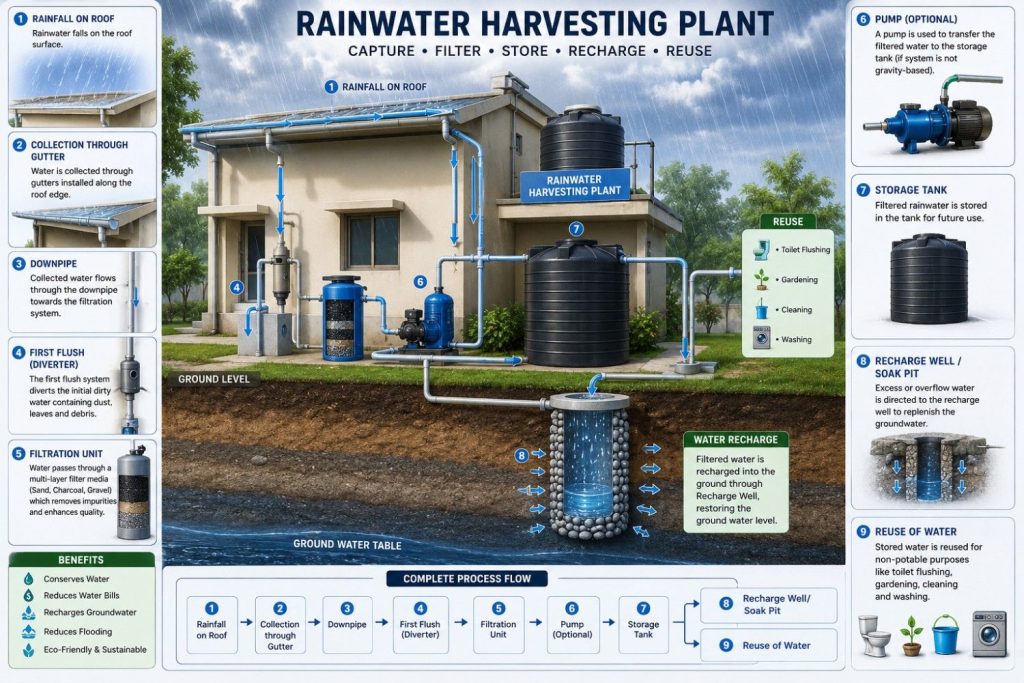
The rainwater harvesting process consists of several stages:
Rainwater Collection
Rainwater is collected from rooftops or designated catchment areas through gutters and pipelines.
Filtration Process
Collected water passes through filtration units that remove leaves, debris, dust, and suspended particles.
Storage System
Filtered rainwater is stored in specially designed storage tanks for future use.
Water Treatment
Additional treatment processes may be applied depending on the intended application and water quality requirements.
Water Distribution
The treated water is supplied for industrial, commercial, agricultural, or domestic purposes.
Technical Architecture of a Rainwater Harvesting System
An efficient rainwater harvesting plant relies on a carefully designed sequence of components to collect, filter, store, and distribute rainwater for future use.
1. Catchment Area & Collection Channels
Step 1: Collection
Rainwater is collected from rooftops, paved surfaces, industrial facilities, or specially designed catchment areas that maximize water collection efficiency. The collected water is then directed through gutters and pipelines to the treatment system.
2. First-Flush Diversion System
Step 2: Initial Debris Removal
The first rainfall after a dry period often contains dust, leaves, bird droppings, and other contaminants accumulated on the collection surface. The first-flush diverter automatically separates and discards this initial contaminated water to improve overall water quality.
3. Filtration & Sedimentation Unit
Step 3: Purification
The collected rainwater passes through multiple filtration stages consisting of gravel, sand, activated carbon, and other filter media. These filters remove suspended solids, organic matter, odors, and fine contaminants, ensuring cleaner and safer water.
4. Storage Tank & Groundwater Recharge
Step 4: Storage & Distribution
The filtered water is stored in underground reservoirs, overhead tanks, or modular storage systems for future use. Excess rainwater can be safely directed to groundwater recharge wells or recharge pits, helping replenish underground water resources and reduce water scarcity.
Rainwater Harvesting Process Flow
Catchment Area → First-Flush Diverter → Filtration Unit → Storage Tank → Distribution / Groundwater Recharge
Benefits of Rain Water – Rainwater Harvesting Plant in Bangladesh
Reduces Water Bills
Utilizes free rainwater and reduces dependence on external water sources.
Conserves Groundwater
Helps recharge groundwater and minimizes excessive extraction.
Sustainable Water Supply
Provides an alternative water source during water shortages.
Environmentally Friendly
Reduces stormwater runoff and supports sustainable water management.
Supports Industrial Operations
Provides water for cooling, cleaning, landscaping, and process applications.
Improves Water Security
Ensures a reliable backup water source throughout the year.
Applications of Rainwater Harvesting Systems
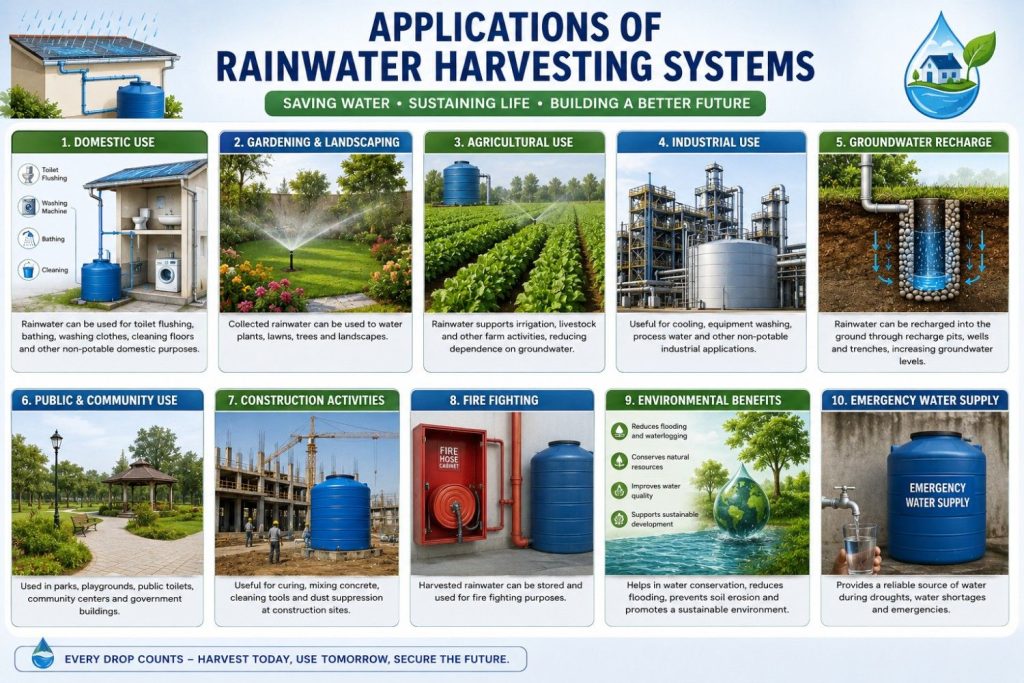
Our rainwater harvesting solutions are suitable for:
Residential Buildings
Water storage for household and landscaping use.
Commercial Buildings
Supplementary water supply for daily operations.
Industrial Facilities
Process water, cooling systems, and utility applications.
Educational Institutions
Campus-wide water conservation programs.
Hospitals & Healthcare Facilities
Non-potable water applications and sustainability initiatives.
Agricultural Projects
Irrigation and farming operations.
Why Choose Water Treatment BD?
Water Treatment BD is a trusted provider of Rain Water – Rainwater Harvesting Plant in Bangladesh solutions with complete engineering support.
Our Advantages
- Experienced water treatment engineers
- Customized rainwater harvesting designs
- High-quality filtration systems
- Professional installation services
- Cost-effective project solutions
- Long-term maintenance support
- Sustainable water management expertise
- Nationwide service coverage
We deliver reliable rainwater harvesting systems tailored to the specific requirements of residential, commercial, and industrial clients.
Importance of Rainwater Harvesting in Bangladesh
Bangladesh experiences significant annual rainfall, making rainwater harvesting an effective strategy for addressing water scarcity and reducing pressure on groundwater resources. Properly designed systems can help industries and communities achieve long-term water sustainability goals.
Environmental Compliance and Water Conservation
Organizations implementing rainwater harvesting systems should follow national environmental and water conservation guidelines. For official environmental information, visit:
Frequently Asked Questions (FAQ)
What is a rainwater harvesting plant?
A rainwater harvesting plant is a system that collects, filters, stores, and reuses rainwater for various applications.
Is rainwater harvesting suitable for industries?
Yes, industries can use harvested rainwater for cooling, cleaning, landscaping, and utility operations.
Can harvested rainwater be used for drinking?
Additional treatment and disinfection are required before rainwater can be used for drinking purposes.
How much water can a rainwater harvesting system collect?
The collection capacity depends on rainfall, catchment area size, and storage tank capacity.
Does Water Treatment BD provide installation services?
Yes, we provide complete design, installation, commissioning, and maintenance services.
Contact Water Treatment BD Today
Looking for a reliable Rain Water – Rainwater Harvesting Plant in Bangladesh?
Contact Water Treatment BD for customized rainwater harvesting solutions, expert consultation, professional installation, and long-term maintenance support.